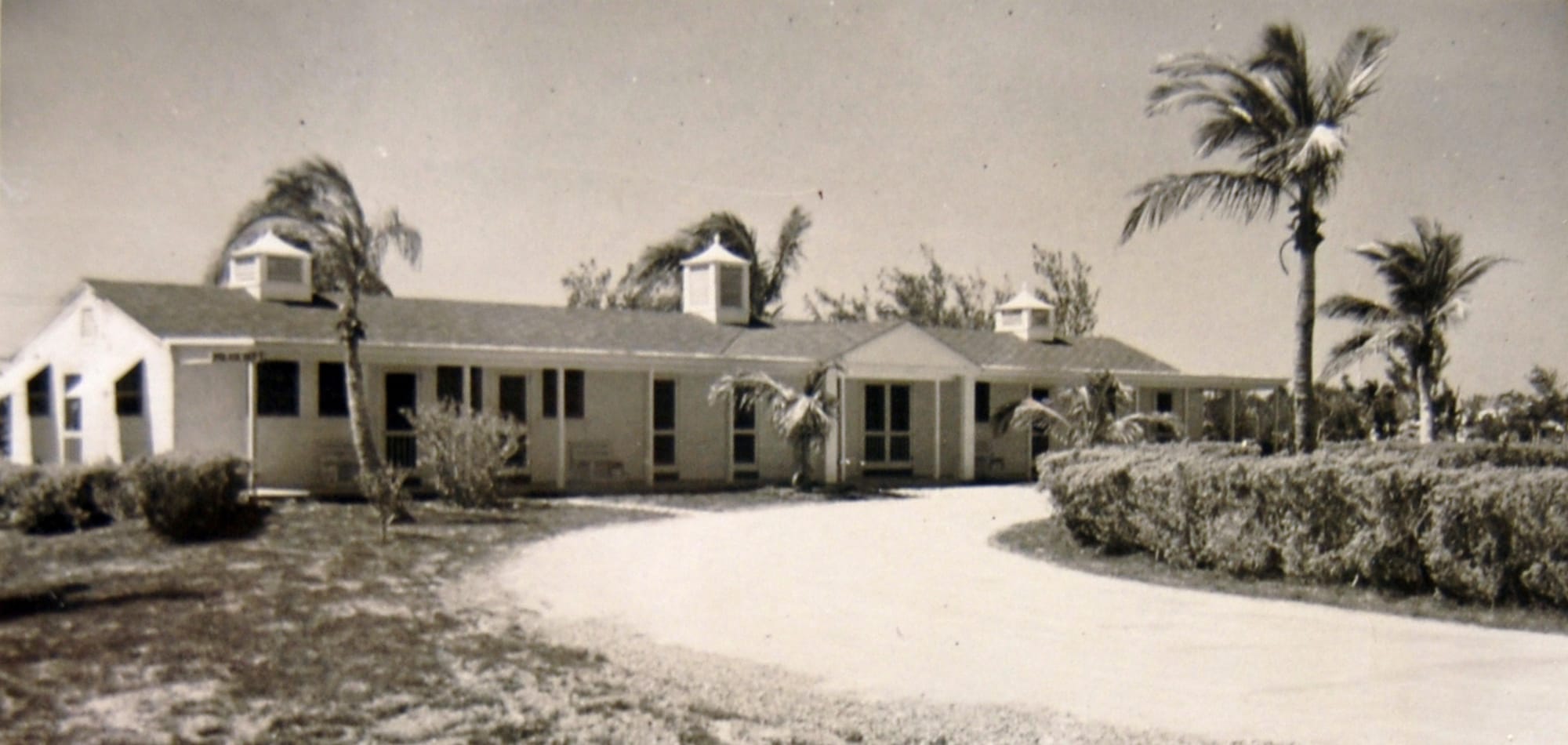
Bal Harbour was born of a vision of infinite possibility: a vision that has defined this community, making it an internationally renowned destination. Today, Bal Harbour is among the most elegant, exclusive and sought-after beach destinations in South Florida and beyond.
Early Years and Development:
1929:
Miami Beach Heights, a Detroit-based real estate development corporation purchases the raw land that will become Bal Harbour Village. Headed by visionary industrialist Robert Graham, along with associates Carl Fisher and Walter O. Briggs, they began the task of crafting a remarkable new community from the ground up.
One of the 20th century’s leading urban planning firms, Harland Bartholomew & Associates, is enlisted to design the Bal Harbour Village as a modern community committed to exceptionally high standards, superior services, and civic pride.
1941:
Development is halted during World War II, with the land leased to the US Military for $1 a year.
1946:
AUGUST: Bal Harbour Village is incorporated, and development begins in earnest. Initially called “Bay Harbour,” the name “Bal Harbour” is finally selected as indicating both coast and bay—taking letters from “bay” and “Atlantic” to create “Bal.”
DECEMBER: Bal Harbour’s first hotel opens for business. Described as “ultra-modern,” the ten story, 160-room Kenilworth-by-the-Sea sets a standard for luxurious leisure.
A total of nine resorts would line the Village’s beachfront — the Sea View Hotel, the Bal Harbour, the Balmoral, the Ivanhoe, the Colony, the Singapore, the Beau Rivage and the Americana.
The 50’s and 60’s
Bal Harbour’s world-class resorts attract a steady stream of upscale clientele. Considered (together with Miami Beach) as “America’s Riviera,” it proves a magnet for the era’s top musicians and entertainers. Count Basie and Guy Lombardo could be seen having drinks at the Ivanhoe’s Pump Room Lounge. Frank Sinatra and his Rat Pack frequented the Americana’s Carnival Supper Club. Bal Harbour’s hotels quickly became the chosen destination for countless dignitaries, celebrities, and presidents.
1953:
Famed host Arthur Godfrey brings considerable media attention as the first entertainer to televise nationally from Bal Harbour, broadcasting to his 40—60 million-strong radio and television audiences from the Kenilworth Hotel. Other television personalities follow, including Jackie Gleason and Ed Sullivan.
1957:
Real estate developer Stanley Whitman buys 16 acres (originally planned for a gas station and grocery store), with the plan of creating a luxury open-air shopping mall.
1965:
Bal Harbour Shops opens with 30 upscale tenants. Whitman entices Stanley Marcus to open his first Neiman Marcus outside of Texas, with Saks Fifth Avenue and other high-end retailers following suit. In time, Bal Harbour Shops became the first mall location for Cartier and Bulgari, and the first ventures outside of New York for Louis Vuitton, Prada and Sergio Rossi.
21st Century: Today, and the Future:
As a thriving leisure, luxury, dining and cultural destination that sets a standard for Miami and Southern Florida communities, Bal Harbour Village continues its tradition of economic development and community improvement. Here are some highlights of recent years:
2007:
Originally opened in 1956 as the Hotel Americana , the historic 645-room Sheraton Bal Harbour hotel, once a favorite haunt for celebrities from Frank Sinatra and the “Rat Pack” to President Kennedy, was demolished in preparation for the building of the future St. Regis Bal Harbour Resort
2011:
St. Regis Bal Harbour Resort opens on the former site of Sheraton Bal Harbour
2016:
Ritz-Carlton Bal Harbour is inaugurated on the site formerly occupied by Regent Bal Harbour, subsequently ONE Bal Harbour.
Bal Harbour Village celebrates its 70th Anniversary and launches its Beach Path Art Program
2017:
Oceana replaces the former site of the Bal Harbour Club, a resort-style condominium residence community. Oceana currently features works by celebrated American artist Jeff Koons.
2021:
Bal Harbour Village celebrates its 75th Diamond Jubilee
2023:
Waterfront Park is slated to open. The new Park will feature wide-open grassy areas for soccer and frisbee, strolling gardens, meditative spaces, progressive exercise zones, and a “Mother Earth-cycle-of-life” themed playground designed by award-winning Danish firm, Monstrum. A tiered event space, a splash path, and additional Raymond Jungles-designed landscaping include a forest-style canopy that leads visitors into the new Community Center, created by Bernard Zyscovich.
2024:
New Bal Harbour Jetty scheduled to open. Originally constructed in 1927 by the Army Corps of Engineers as a utilitarian breakwater and mitigation tool to protect the Haulover Inlet, the all-new Bal Harbour Jetty is the result of extensive planning, community input and competitive design reviews. Construction will begin in 2023.